THE DAILY REFRAMER
ISSUE NO. 001 • SEPTEMBER 2026
| CONTENTS ▾
THE DAILY REFRAMER
THE DAILY REFRAMER
ISSUE NO. 001 • SEPTEMBER 2026

01

THE INAUGURAL ISSUE
Ground Rules, Vol. 1
INTRO / OPENING NOTE
02
In Working Order
You approach a busy intersection. Your goal is simple: get to the other side. But as you reach the curb, you stop dead in your tracks.
O
h for heaven’s sake, not again. This is the second time this week. You just glanced at your watch and realized it’s nearly twenty-five minutes into the lunch hour. Without
you realizing it, it appears everyone at the office has, once again, sent you on the farthest route today and you’re on foot. In a workplace that held even a modicum of civility, running late for lunch probably wouldn’t come with a side of adrenaline.
Unfortunately, your office is a lawless place, and the worst of it lately is ol’ Gizzard Gullet Gary. And although you can’t prove it, you’re about 99.9% sure he’s the one who has been stealing your takeout from the communal refrigerator. (He knows everyone can see him running to the restroom after lunch, so it’s unclear why he and his spice intolerance continue to play this game.)
So back to the office you go, and quickly. In fact, you just got an alert that it’s set to rain in a few minutes, so you put a bit more pep in your step. A brisker walk… a light jog…and there it is. Home plate, just across the street.
Of course, what do you see? Gary. Guzzlin’ Gary, of course. Entering the building after finishing up his own route. Now, you are sprinting. Is this a bit ridiculous? Yes, probably. You probably look ridiculous. But the onlookers don't understand. They don't know what horrors await you. They don't know what Gary's about to do…
But just as you’re about to cross the street, something happens. You come to a nearly screeching halt, and something stops you dead in your tracks.
What’s happened? Could it be it that you calculated the velocity of the oncoming traffic? Not quite. Or maybe you could superhumanly sense an oncoming eighteen-wheeler. No, not that either. Believe it or not, it was something far more mundane than that. You stop because a chirping, relatively small, plastic box mounted on a metal pole has displayed a glowing, bright red hand. That's it. You were so determined and just that quickly, your mission’s been tanked.

Within milliseconds, you’re beyond frustrated. You’re fidgeting and fussing…and VOOM. No more than 15 feet in front of you, and at no less than 100 mph on a city street, a Lamborghini blazes right past you in a split second.
And so you stand there on the sidewalk. Still. Expectations for the moment are now reset.
Every single day, you make hundreds of “smart” choices. Most fascinatingly, not in any fashion that could conventionally be considered “deliberate.” You look at the hands of a clock to determine if now is the allotted time to be hungry or tired. You scan the room when you enter a building, intuitively adjusting your posture, your volume, your eye contact. When on the road, you see yellow lines painted on the ground, and your hands automatically migrate wherever the need to steer clear of lines requires.
We’ve heard it once or twice before: the idea that rules are no more than restrictions—walls built to confine us. But examine our reality for a moment. In many contexts, they truly function as a masterpiece of evolutionary engineering.
If your brain had to analyze the physics of every intersection, negotiate the social contracts of every greeting, or invent a new routine every single morning, your cognitive battery would drain before you could even finish your breakfast. The human brain consumes roughly 20% of the body’s energy. To survive, it must be ruthlessly conservative with its resources, and it does this through outsourcing.
By offloading our routine actions to external structures, we free up our minds to create, to problem-solve, to love, to dream. This sort of automation is a genuine miracle of efficiency, keeping our world from collapsing into chaos.
The rules of the road are laid out for us so that we can more carefully glide—or walk briskly—down it. And we trust these external signals to keep us safe, to keep us efficient, and to keep us moving forward. As long as these structures are aimed at preserving your best interests, it’s a fantastic system.
QUICK QUESTION
03
Consider a hypothetical...
Someone tells you there is rule. They can't show you where it is written and they can't prove it exists. What could get you to agree to follow it anyway?
(Which one feels most convincing?)
A
You trust the person telling you
B
It seems to match what most people do.
C
You can see that following it leads to better outcomes.
D
It just feels morally right, even without a written source.


Or, your own answer…
What else could make you accept a rule without seeing it in writing?
WHAT'S THIS?
?
✓
SPECIMEN STUDY
04
The Queue
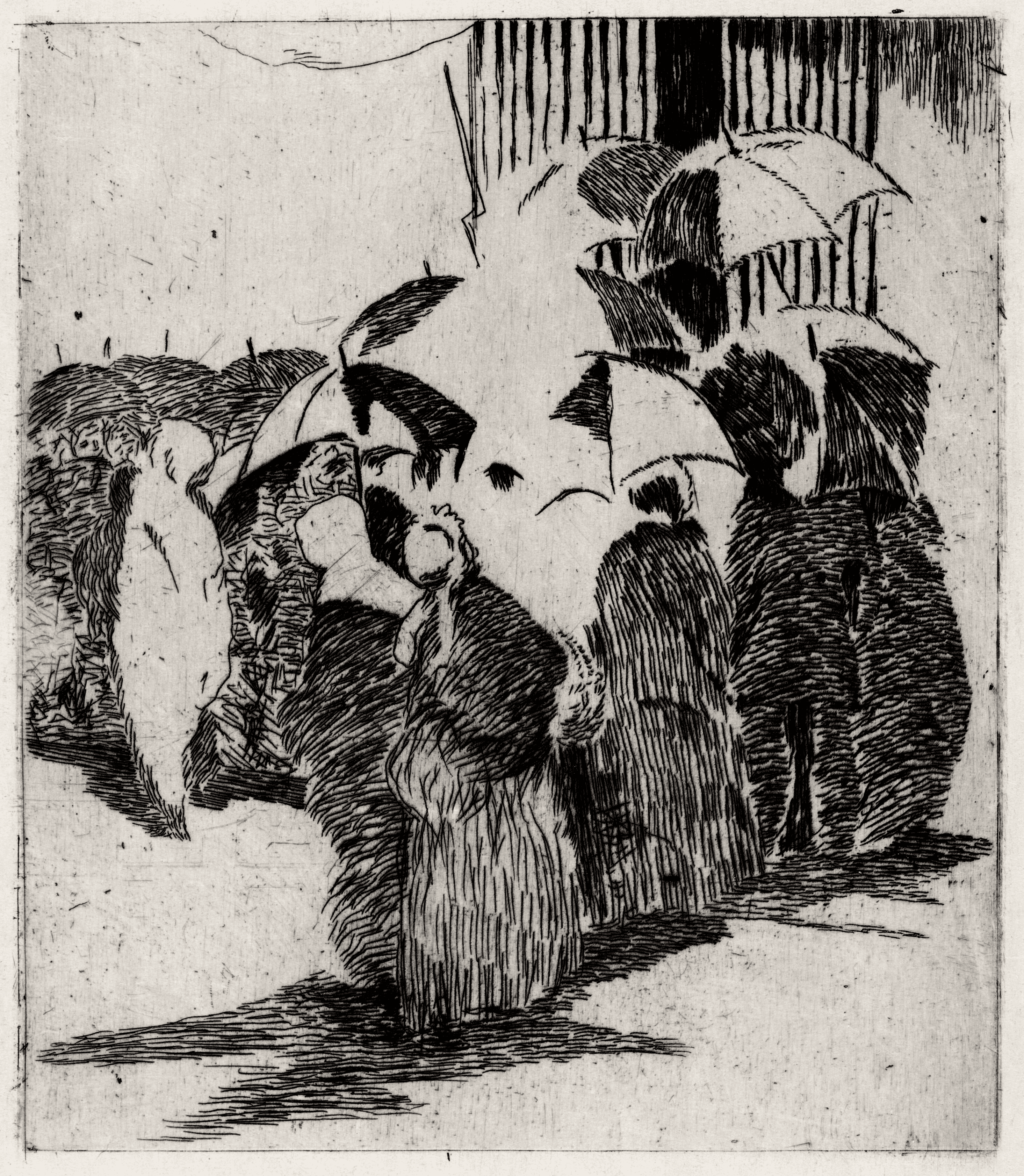
EACH TIME SOMEONE ENTERS A BAKERY, a bank, or an airport terminal, they most certainly go looking for it. Determined to claim what’s rightfully theirs, they know exactly where to grab the number that guarantees them their bounty. This is the queue. The Specimen Study takes a more intentional look at an ordinary cross-section of human life and examines the way it works. Today, we examine how and why we stand in line. This profound sociological phenomenon takes an abstract, invisible construct—such as the time of arrival—and translates it into a visible, spatial reality. A person’s spot in a line seems to act as a temporary license to that spot, specifically in relationship to the others there.
A triumph of cooperative efficiency, allowing total strangers to distribute limited resources peacefully without resorting to a chaotic, violent scrum. But what happens when the physical line dissolves? Observe…
Picture a crowded coffee shop at 11 AM on Saturday. No velvet ropes or stanchions, and definitely no straight line. Instead, twenty people are scattered casually across a room. Some are sitting on armchairs, others are leaning against a counter, a few are checking their phones over by the door. To the untrained eye, it is an amorphous mass of uncoordinated individuals.
Then, a barista yells, "Next!" A newcomer walked in ten seconds ago. Seeing an open path to the register, they take a step forward. Ahh! Instantly, the room shifts a bit. The ambient air thickens with a sudden, icy but passive-aggressive tension. A woman sitting on a couch drops her book. A man by the napkins clears his throat. Someone steps in to set the record straight and settles heart rates in six words: "Excuse me, there’s actually a line."
Right away, we can see a completely invisible and intangible form reveal itself. So, is the queue comprised of the bodies standing in a row? Or is it an agreement? Even when scattered across twenty feet of open space, everyone in that room is mentally holding what we could consider a localized, almost psychological map of the space and especially their territory within it. They know exactly who was there before them, and who arrived after them. They have even constructed a sort of wall in their minds, if you will, and the moment the newcomer steps across its unwritten boundaries, that act triggers an immediate, collective defense mechanism. What’s more, it is typically fully enforced by a single glance. It really is quite intriguing.
THINK YOU KNOW THE ANSWERS TO THESE QUESTIONS?
When you’re in a line, how do you know where the line begins? Is it marked? How do you know where it begins when it isn't marked?
How do you decide where you should stand? Is it based on a sign? A person? A gap? A habit?
When is the exact threshold-moment at which the others react to someone seemingly breaking the rules of the line? What do reactions about people cutting the line suggest about what the people there value?
What does the queue offer? Does it merely promise a place in line? Or is it a promise of fairness? Order? Access? Dignity? What, precisely, is the thing we are waiting in expectation to receive?
What does a queue ask us to give up? And what might we gain in return?
CLASSIFICATION PUZZLE
05
The Sorting Room
Below are six different forces steering behavior. Sort each into:
DEFAULT / FORMAL POLICY / INCENTIVE / LAW / SOCIAL NORM
(One category appears twice.)
A)
A ride-share app doubles the price of a trip during a thunderstorm.
B)
Everyone in a courtroom rises when the judge enters.
C)
New employees are automatically enrolled in the company’s retirement plan unless they opt out.
D)
A city ordinance imposes a $50 fine for parking on this block after 6:00 p.m.
E)
An entire office department answers the executive director’s emails within minutes, even though no policy sets a response time.
F)
A company handbook requires closed-toe shoes in the warehouse.

✓
INTO THE RABBIT HOLE
06

Schelling's Focal Point
You and a total stranger are each offered $1 million if you can meet somewhere online tomorrow. However, you cannot communicate with one another, and no platform, account, or time has been arranged.
At the time you choose, open one public social-media profile. If you and the stranger independently choose the same profile at the same time, you split the money.
Whose profile do you open? At what time?
This classic coordination problem was made famous by Thomas Schelling. In an experiment conducted around 1960, strangers were told they had to meet in New York City on a specific day, but were given no time, no location, and zero way to communicate. Mathematically, they should have missed each other entirely. But that isn’t what happened.
GOOGLE THIS LATER:
Schelling point / focal point.
BRAINTEASER
07

Logic Games
01
What comes next in the sequence?

02
Which one is breaking the rule?

✓
03
What comes next in the sequence?

04
Which one is breaking the rule?

✓
05
Legal, Finance, HR, and Security are all required to approve your company's next big decision.
•Finance must occur immediately after Legal.
•Security must occur after HR.
•HR cannot be first or last.
What is the order of approvals?
[ 1 ] [ 2 ] [ 3 ] [ 4 ]
06
Director, Analyst, Client, Counsel, and Project Lead sit in five seats from left to right.
•Director never sits next to Client.
•Counsel sits immediately to the Analyst’s right.
•Project Lead sits at one end.
•Client sits somewhere to the left of the Analyst.
[ 1 ] [ 2 ] [ 3 ] [ 4 ] [ 5 ]
1) Which of these people could sit in Seat 1?
A) Director
B) Analyst
C) Client
D) Counsel
2) If the Project Lead sits in Seat 1, who must sit in Seat 5?
3) If the Client sits in Seat 1, who must sit in Seat 3?
4) Which statement must be true?
A) Client sits next to Project Lead
B) Director sits somewhere to the right of Counsel
C) Project Lead sits to the right of Director
D) Client sits in Seat 1
5) If the Director sits in Seat 5, who must sit in Seat 2?
6) How many complete seating arrangements satisfy all four rules?
✓
CHECKPOINT
08

A Haunted Landscape
When solutions overstay their
welcome.
T
ake a look at your phone. Pull up the keyboard. If you’re reading this on a computer, look down at your keyboard. That top row of letters you've got
there: “Q-W-E-R-T-Y.” That is one of our most universal interfaces of human thought. Billions of us train our fingers and the modern minds attached to them—for thousands of hours, even—to master this exact configuration of keys. It now feels quite normal and even natural to us.
Yet, this practice, this arrangement of the keys, it is entirely backward. In the 1870s, early mechanical typewriters had a critical flaw: if a typist struck adjacent keys too quickly, the metal hammers would crash into one another and jam the machine. To solve this mechanical engineering problem, an inventor named Christopher Sholes designed a layout that intentionally separated the most common letter combinations.
Let’s pull over on this point. There may be something here… Examine the idea for a moment, that there do exist contexts in which the most fitting solution isn’t to make the process faster or more intuitive; but rather, to slow you down. To pace you. Christopher Sholes built a layout to deliberately stutter the intuitive flow of your fingers. And for its goal, decreasing typewriter jams, this worked marvelously.
But this leads us to an intriguing question. If that solution is still being used today, are we still bound by the constraints
that model was built for? And if so, is it to an extent that justifies sticking with it? Observe the typical modern life. Mechanical hammers are no longer a part of the hardware we use to type today. Digital screens and optical switches do not really have the issues more physical moving parts would. Yet, over a century later, we are still training our modern, high-speed brains to submit to a clunky restriction invented to stop iron levers from jamming in the nineteenth century. And so, we reach a key checkpoint.
THIS is the hidden cost of our love affair with convenience.
We are navigating a landscape built by the logic of those who have long since departed this world. Because shortcuts are so comfortable, we blindly inherit entire systems of behavior without ever verifying the reasons they were built in the first place. Most often, we—you and I—entirely skip the step of making sure the math still checks out. From there, we can often mistake a historical compromise for a universal truth. And most critically to our wellbeing, this blind inheritance doesn’t always take a benign approach to guiding our lives. Very often, it takes the reins on how we think, how we judge ourselves, and how we treat one another.
Think about the standard five-day, 40-hour work week.
Each day, we all agree with one another to treat it like an absolute law of human productivity or societal optimization. What’s fascinating here is that this arrangement wasn’t designed by neuroscientists who verified that this is optimal for human wellbeing, or even productivity.
This arrangement, the number 40, was codified in 1926 by Henry Ford so that factory workers on an assembly line wouldn’t faint from physical exhaustion. It was an acknowledgement that given the present circumstances, the previous number of hours was not quite conducive to maintaining the wellbeing of the workers. Further, that in itself was inherently an acknowledgement that the wellbeing of workers is a critical component of the entire operation. Critical enough to examine the circumstances, to evaluate whether they are conducive to the wellbeing of the workers or not, and to adjust them accordingly.
It is curious that today, in a vastly different time, with vastly different circumstances, we still use that exact assembly-line grid to structure our very different modern lives, let alone those of creative thinkers, artists, and digital innovators. Interestingly, we have taken to concluding that someone is
unproductive or lazy should we observe them departing from our ancient manufacturing schedule.
Further, examine our social rules. The hidden parameters that suggest who is allowed to speak up first in a corporate meeting, the covertly rigid milestones of what a successful life looks like, or the packaged deal of compliance and politeness that we demand from those of us who are in positions of lesser power. What we’re able to see here is that we frequently follow these scripts because, understandably so, it is faster and more convenient than asking questions.
But when you look underneath the hood, you observe some truly fascinating mechanics: that many of the rules we take for granted were built specifically for one job—a specific group of people, in a specific historical moment, to protect a specific set of interests—and we are using them well beyond their appropriate purposes. If we have been blindly following a rule out of habit or convenience, we have created a pretty substantial risk that we haven’t just been outsourcing our cognitive load, but have also been outsourcing our procurement of our wellbeing, and with that, our ethics. (Oopsie.)
So, THEN what?
What follows from this?
We’ll do what we do best here and examine that. (You’ve grown quite good at this already, Examiner.)
What is the solution in a case where you have been using a broken piece of hardware that, unbeknownst to you, has not been calibrated for your particular job? What do we do when, based on inaccurate information, we have made high-stakes decisions, including determining that those who have used different information… were wrong?
The impulse is to think this is insurmountably complicated. However, contrary to the overtly uttered idiom, the evidence suggests that actually, we are not at all "cooked." Luckily, humans are vast in number and have existed for centuries. We have a wealth of prior experiences and experiments to draw from. Most likely, if we can manage to ask the right questions, we’ll manage to find incredibly helpful answers.
THE DAILY REFRAMER
HIDDEN ASSUMPTION SPOTTER
09
All Things Considered…
TIME FOR AN ASSUMPTION SPOTTER!
An assumption is something that has to be true for a statement to hold up. (And sometimes we treat things as true even though we aren’t quite sure that they are.)
Can you think of anything that would need to be true in order for this statement to also be true?
“If people don't like it, they can leave.”

✓
CONTEXT MATCH CHALLENGE
10
The
Grafting
Lab
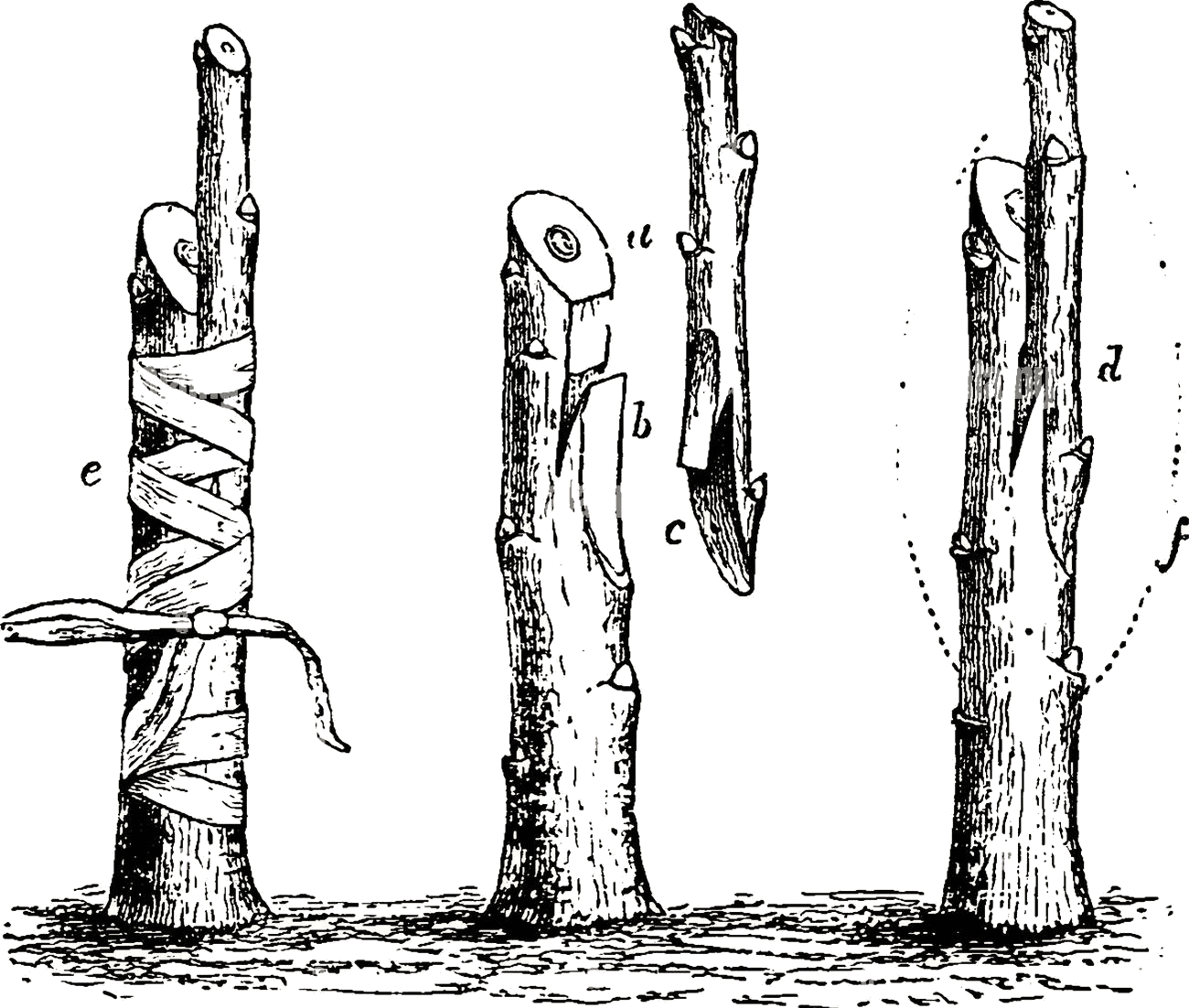
Do you think problems are always as unique & complicated as they seem? Strip away the unnecessary vocabulary of the problem. You may find that the same underlying structure has caused a similar jam in an entirely different context—one where the problem may already have been solved.
Test your eye and see if you can spot the similarities…
ROUND
01
A university keeps replacing grass where students cut diagonally across the lawn instead of using the paved path. After repeatedly paying to repair the same strip, the university asks for a more lasting way to stop the problem.
Might any of these other predicaments offer a transferable solution?
A)
A supermarket manager examining why excessively long lines repeatedly occur at its open checkout stations.
B)
A traffic engineer examining why the same driver repeatedly uses a bus-only lane to bypass traffic at a busy intersection.
C)
A nonprofit's web designer examining why visitors repeatedly use the search bar to reach its "Make a Donation" page, even though it's already listed in the site menu.
✓
ROUND
02
A team says it wants honest dissent. In meetings, the boss presents a plan and asks whether anyone sees a problem. Nobody objects. After one plan goes badly, several employees say privately that they had doubts before the decision was made. The company wants a better way to hear those concerns while there is still time to use them.
Which other system could offer a transferable solution?
A)
An airline safety manager examining why junior crew members raise concerns about a captain's risky call only after the flight, even though crew are expected to flag safety problems as they happen.
B)
A city planner examining why residents first object to a street redesign after construction begins, when they were never asked for feedback beforehand.
C)
A professor examining why students wait until after class to challenge a classmate's answer, even though disagreement is invited during discussion.
✓
ROUND
03
A building manager keeps putting off small repairs when the budget is tight or something more urgent comes up. Each delay seems reasonable in the moment. Months later, some of those minor problems have turned into expensive emergencies. The owner wants a way to stop the cycle.
Do you think any of these might be sneaky places for helpful solutions?
A)
A company's accounting manager examining why staff repeatedly leave small bookkeeping errors for later during busy weeks, when they take hours to trace and correct at month-end.
B)
A restaurant manager examining why staff repeatedly postpone restocking items that are running low during the dinner rush, sometimes causing them to sell out.
C)
A clothing store manager examining why staff repeatedly wait for weekend sales numbers before reordering items that are running low, even though late orders sometimes cost more to rush.
✓
PARTING NOTE
11
Awake at the Wheel
A final note on the nonhuman machinery that propels the living—and on seeing it more clearly.
D
epending on the perspective from which you view it, if you try to process it all at once—the way our
lives can feel almost mandated, the way broader society is arranged—a sense of vertigo may begin to set in. How can it be that so many of the structures that govern our daily lives have far more in common with ancient artifacts than they do with bespoke, state-of-the-art solutions?
You take a moment to look down and you realize that you are driving down a highway at sixty miles per hour and the stoplights before you have no way to know if their instructions will even work for you. All they can do is instruct, as they themselves were previously instructed to. But if you try to live without any structures at all, you face a different kind of misdirection. You plunge, head first, straight into cognitive chaos, paralyzed by the sheer exhaustion of having

“There is moving machinery behind what tells us to act and beneath what signals us to move.”
to reinvent the concept of a morning routine, of a conversation, of a workday… every single day. The comfort and convenience of offloaded autonomy… they create in us a habit of reliance. If, for too long and in too many ways, we allow it to go on… If we allow third parties to decide what we like, when we need to sleep, when we need to eat… the actual taste for it—the eye for who we are—atrophies.
Soon, the most you’ve felt human and in your body is the last time your arm fell asleep. The cloudiness of routine, in many contexts, is all that some of us are afforded access to. In appreciation of the miracle of order and rules, and in fear of the pitfalls of life without them, we have strongly overcorrected. Now, our most accessible understanding of the way the system we’re in works is one that leaves us to assume that the hands on the clock are all there is to it.
But as we’re learning here at TDR already, that’s not exactly true, is it? Underneath the faces of the clocks that tell us what time to begin the next steps in our routine, what time to begin the next phase of our life, there is a moving network of gears and cogs, each of which is susceptible to error.
This month we’ve discussed and experimented with the idea that there is more to the rules that guide us than what we take them to be at face value. Lots more! There is moving machinery behind what tells us to act and beneath what signals us to move. At times, what can appear to be a bad signal isn’t even reality. It’s the result of faulty hardware or—humanly, in our most human essence—faulty readings. It comes as a huge relief to know that both of these are wonderfully correctible errors.
If you had to guess, how many times and in how many places have you assumed that your role within the immediate surroundings was as static as the hands on a clock when, in reality, it was as dynamic as the moving network of pieces under the face? More poignantly, how many times and in how many places have you assumed your role to be that of a gear inside of a clock when, pound-for-pound, you didn’t have nearly as much in common with a gear in a clock as you did with a clockmaker?
Many of the most impressive things you’ll do from here on out are on the other side of the future instances—bite-sized or otherwise—in which you were interested in being more like a clockmaker. How exciting is that? That even if we can’t picture it now, it’s there… a point in the future just waiting for us to arrive. We think that’s very cool to think about here. And we can’t wait to think about plenty more of these things with you!
Until next time,
Happy thinking!
THE DAILY REFRAMER
01
THE INAUGURAL ISSUE
Ground Rules, Vol. 1
INTRO / OPENING NOTE
02
In Working Order
You approach a busy intersection. Your goal is simple: get to the other side. But as you reach the curb, you stop dead in your tracks.
O
h for heaven’s sake, not again. This is the second time this week. You just glanced at your watch and realized i
t’s nearly twenty-five minutes into the lunch hour. Without you realizing it, it appears everyone at the office has, once again, sent you on the farthest route today and you’re on foot. In a workplace that held even a modicum of civility, running late for lunch probably wouldn’t come with a side of adrenaline.
Unfortunately, your office is a lawless place, and the worst of it lately is ol’ Gizzard Gullet Gary. And although you can’t prove it, you’re about 99.9% sure he’s the one who has been stealing your takeout from the communal refrigerator. (He knows everyone can see him running to the restroom after lunch, so it’s unclear why he and his spice intolerance continue to play this game.)
So back to the office you go, and quickly. In fact, you just got an alert that it’s set to rain in a few minutes, so you put a bit more pep in your step. A brisker walk… a light jog…and there it is. Home plate, just across the street.
Of course, what do you see? Gary. Guzzlin’ Gary, of course. Entering the building after finishing up his own route. Now, you are sprinting. Is this a bit ridiculous? Yes, probably. You probably look ridiculous. But the onlookers don't understand. They don't know what horrors await you. They don't know what Gary's about to do…
But just as you’re about to cross the street, something happens. You come to a nearly screeching halt, and something stops you dead in your tracks.
What’s happened? Could it be it that you calculated the velocity of the oncoming traffic? Not quite. Or maybe you could superhumanly sense an oncoming eighteen-wheeler. No, not that either. Believe it or not, it was something far more mundane than that. You stop because a chirping, relatively small, plastic box mounted on a metal pole has displayed a glowing, bright red hand. That's it. You were so determined and just that quickly, your mission’s been tanked.
Within milliseconds, you’re beyond frustrated. You’re fidgeting and fussing…and VOOM. No more than 15 feet in front of you, and at no less than 100 mph on a city street, a Lamborghini blazes right past you in a split second.
And so you stand there on the sidewalk. Still. Expectations for the moment are now reset.
Every single day, you make hundreds of “smart” choices. Most fascinatingly, not in any fashion that could conventionally be considered “deliberate.” You look at the hands of a clock to determine if now is the allotted time to be hungry or tired. You scan the room when you enter a building, intuitively adjusting your posture, your volume, your eye contact. When on the road, you see yellow lines painted on the ground, and your hands automatically migrate wherever the need to steer clear of lines requires.
We’ve heard it once or twice before: the idea that rules are no more than restrictions—walls built to confine us. But examine our reality for a moment. In many contexts, they truly function as a masterpiece of evolutionary engineering.
If your brain had to analyze the physics of every intersection, negotiate the social contracts of every greeting, or invent a new routine every single morning, your cognitive battery would drain before you could even finish your breakfast. The human brain consumes roughly 20% of the body’s energy. To survive, it must be ruthlessly conservative with its resources, and it does this through outsourcing.
By offloading our routine actions to external structures, we free up our minds to create, to problem-solve, to love, to dream. This sort of automation is a genuine miracle of efficiency, keeping our world from collapsing into chaos.
The rules of the road are laid out for us so that we can more carefully glide—or walk briskly—down it. And we trust these external signals to keep us safe, to keep us efficient, and to keep us moving forward. As long as these structures are aimed at preserving your best interests, it’s a fantastic system.
QUICK QUESTION
03
Consider a hypothetical...
Someone tells you there is rule. They can't show you where it is written and they can't prove it exists. What could get you to agree to follow it anyway?
(Which one feels most convincing?)
A
You trust the person telling you
B
It seems to match what most people do.
C
You can see that following it leads to better outcomes.
D
It just feels morally right, even without a written source.
Or, your own answer…
What else could make you accept a rule without seeing it in writing?
WHAT'S THIS?
?
✓
SPECIMEN STUDY
04
The Queue
EACH TIME SOMEONE ENTERS A BAKERY, a bank, or an airport terminal, they most certainly go looking for it. Determined to claim what’s rightfully theirs, they know exactly where to grab the number that guarantees them their bounty. This is the queue. The Specimen Study takes a more intentional look at an ordinary cross-section of human life and examines the way it works. Today, we examine how and why we stand in line. This profound sociological phenomenon takes an abstract, invisible construct—such as the time of arrival—and translates it into a visible, spatial reality. A person’s spot in a line seems to act as a temporary license to that spot, specifically in relationship to the others there.
A triumph of cooperative efficiency, allowing total strangers to distribute limited resources peacefully without resorting to a chaotic, violent scrum. But what happens when the physical line dissolves? Observe…
Picture a crowded coffee shop at 11 AM on Saturday. No velvet ropes or stanchions, and definitely no straight line. Instead, twenty people are scattered casually across a room. Some are sitting on armchairs, others are leaning against a counter, a few are checking their phones over by the door. To the untrained eye, it is an amorphous mass of uncoordinated individuals.
Then, a barista yells, "Next!" A newcomer walked in ten seconds ago. Seeing an open path to the register, they take a step forward. Ahh! Instantly, the room shifts a bit. The ambient air thickens with a sudden, icy but passive-aggressive tension. A woman sitting on a couch drops her book. A man by the napkins clears his throat. Someone steps in to set the record straight and settles heart rates in six words: "Excuse me, there’s actually a line."
Right away, we can see a completely invisible and intangible form reveal itself. So, is the queue comprised of the bodies standing in a row? Or is it an agreement? Even when scattered across twenty feet of open space, everyone in that room is mentally holding what we could consider a localized, almost psychological map of the space and especially their territory within it. They know exactly who was there before them, and who arrived after them. They have even constructed a sort of wall in their minds, if you will, and the moment the newcomer steps across its unwritten boundaries, that act triggers an immediate, collective defense mechanism. What’s more, it is typically fully enforced by a single glance. It really is quite intriguing.
THINK YOU KNOW THE ANSWERS TO THESE QUESTIONS?
When you’re in a line, how do you know where the line begins? Is it marked? How do you know where it begins when it isn't marked?
How do you decide where you should stand? Is it based on a sign? A person? A gap? A habit?
When is the exact threshold-moment at which the others react to someone seemingly breaking the rules of the line? What do reactions about people cutting the line suggest about what the people there value?
What does the queue offer? Does it merely promise a place in line? Or is it a promise of fairness? Order? Access? Dignity? What, precisely, is the thing we are waiting in expectation to receive?
What does a queue ask us to give up? And what might we gain in return?
CLASSIFICATION PUZZLE
05
The Sorting Room
Below are six different forces steering behavior. Sort each into:
DEFAULT / FORMAL POLICY / INCENTIVE / LAW / SOCIAL NORM
(One category appears twice.)
A)
A ride-share app doubles the price of a trip during a thunderstorm.
B)
Everyone in a courtroom rises when the judge enters.
C)
New employees are automatically enrolled in the company’s retirement plan unless they opt out.
D)
A city ordinance imposes a $50 fine for parking on this block after 6:00 p.m.
E)
An entire office department answers the executive director’s emails within minutes, even though no policy sets a response time.
F)
A company handbook requires closed-toe shoes in the warehouse.
✓
INTO THE RABBIT HOLE
06
Schelling's Focal Point
You and a total stranger are each offered $1 million if you can meet somewhere online tomorrow. However, you cannot communicate with one another, and no platform, account, or time has been arranged.
At the time you choose, open one public social-media profile. If you and the stranger independently choose the same profile at the same time, you split the money.
Whose profile do you open? At what time?
This classic coordination problem was made famous by Thomas Schelling. In an experiment conducted around 1960, strangers were told they had to meet in New York City on a specific day, but were given no time, no location, and zero way to communicate. Mathematically, they should have missed each other entirely. But that isn’t what happened.
GOOGLE THIS LATER:
Schelling point / focal point.
BRAINTEASER
07
Logic Games
✓
✓
01
What comes next in the sequence?
02
Which one is breaking the rule?
03
What comes next in the sequence?
04
Which one is breaking the rule?
05
Legal, Finance, HR, and Security are all required to approve your company's next big decision.
•Finance must occur immediately after Legal.
•Security must occur after HR.
•HR cannot be first or last.
What is the order of approvals?
[ 1 ] [ 2 ] [ 3 ] [ 4 ]
06
Director, Analyst, Client, Counsel, and Project Lead sit in five seats from left to right.
•Director never sits next to Client.
•Counsel sits immediately to the Analyst’s right.
•Project Lead sits at one end.
•Client sits somewhere to the left of the Analyst.
[ 1 ] [ 2 ] [ 3 ] [ 4 ] [ 5 ]
1) Which of these people could sit in Seat 1?
A) Director
B) Analyst
C) Client
D) Counsel
2) If the Project Lead sits in Seat 1, who must sit in Seat 5?
3) If the Client sits in Seat 1, who must sit in Seat 3?
4) Which statement must be true?
A) Client sits next to Project Lead
B) Director sits somewhere to the right of Counsel
C) Project Lead sits to the right of Director
D) Client sits in Seat 1
5) If the Director sits in Seat 5, who must sit in Seat 2?
6) How many complete seating arrangements satisfy all four rules?
✓
CHECKPOINT
08
A Haunted Landscape
When solutions overstay their
welcome.
T
ake a look at your phone. Pull up the keyboard. If you’re reading this on a computer, look down at your
keyboard. That top row of letters you've got there: “Q-W-E-R-T-Y.” That is one of our most universal interfaces of human thought. Billions of us train our fingers and the modern minds attached to them—for thousands of hours, even—to master this exact configuration of keys. It now feels quite normal and even natural to us.
Yet, this practice, this arrangement of the keys, it is entirely backward. In the 1870s, early mechanical typewriters had a critical flaw: if a typist struck adjacent keys too quickly, the metal hammers would crash into one another and jam the machine. To solve this mechanical engineering problem, an inventor named Christopher Sholes designed a layout that intentionally separated the most common letter combinations.
Let’s pull over on this point. There may be something here… Examine the idea for a moment, that there do exist contexts in which the most fitting solution isn’t to make the process faster or more intuitive; but rather, to slow you down. To pace you. Christopher Sholes built a layout to deliberately stutter the intuitive flow of your fingers. And for its goal, decreasing typewriter jams, this worked marvelously.
But this leads us to an intriguing question. If that solution is still being used today, are
we still bound by the constraints that model was built for? And if so, is it to an extent that justifies sticking with it? Observe the typical modern life. Mechanical hammers are no longer a part of the hardware we use to type today. Digital screens and optical switches do not really have the issues more physical moving parts would. Yet, over a century later, we are still training our modern, high-speed brains to submit to a clunky restriction invented to stop iron levers from jamming in the nineteenth century. And so, we reach a key checkpoint.
THIS is the hidden cost of our love affair with convenience.
We are navigating a landscape built by the logic of those who have long since departed this world. Because shortcuts are so comfortable, we blindly inherit entire systems of behavior without ever verifying the reasons they were built in the first place. Most often, we—you and I—entirely skip the step of making sure the math still checks out. From there, we can often mistake a historical compromise for a universal truth. And most critically to our wellbeing, this blind inheritance doesn’t always take a benign approach to guiding our lives. Very often, it takes the reins on how we think, how we judge ourselves, and how we treat one another.
Think about the standard five-day, 40-hour work week.
Each day, we all agree with one another to treat it like an absolute law of human productivity or societal optimization. What’s fascinating here is that this arrangement wasn’t designed by neuroscientists who verified that this is optimal for human wellbeing, or even productivity.
This arrangement, the number 40, was codified in 1926 by Henry Ford so that factory workers on an assembly line wouldn’t faint from physical exhaustion. It was an acknowledgement that given the present circumstances, the previous number of hours was not quite conducive to maintaining the wellbeing of the workers. Further, that in itself was inherently an acknowledgement that the wellbeing of workers is a critical component of the entire operation. Critical enough to examine the circumstances, to evaluate whether they are conducive to the wellbeing of the workers or not, and to adjust them accordingly.
It is curious that today, in a vastly different time, with vastly different circumstances, we still use that exact assembly-line grid to structure our very different modern lives, let alone those of creative thinkers, artists, and digital innovators. Interestingly, we have taken to concluding that someone is
unproductive or lazy should we observe them departing from our ancient manufacturing schedule.
Further, examine our social rules. The hidden parameters that suggest who is allowed to speak up first in a corporate meeting, the covertly rigid milestones of what a successful life looks like, or the packaged deal of compliance and politeness that we demand from those of us who are in positions of lesser power. What we’re able to see here is that we frequently follow these scripts because, understandably so, it is faster and more convenient than asking questions.
But when you look underneath the hood, you observe some truly fascinating mechanics: that many of the rules we take for granted were built specifically for one job—a specific group of people, in a specific historical moment, to protect a specific set of interests—and we are using them well beyond their appropriate purposes. If we have been blindly following a rule out of habit or convenience, we have created a pretty substantial risk that we haven’t just been outsourcing our cognitive load, but have also been outsourcing our procurement of our wellbeing, and with that, our ethics. (Oopsie.)
So, THEN what?
What follows from this?
We’ll do what we do best here and examine that. (You’ve grown quite good at this already, Examiner.)
What is the solution in a case where you have been using a broken piece of hardware that, unbeknownst to you, has not been calibrated for your particular job? What do we do when, based on inaccurate information, we have made high-stakes decisions, including determining that those who have used different information… were wrong?
The impulse is to think this is insurmountably complicated. However, contrary to the overtly uttered idiom, the evidence suggests that actually, we are not at all "cooked." Luckily, humans are vast in number and have existed for centuries. We have a wealth of prior experiences and experiments to draw from. Most likely, if we can manage to ask the right questions, we’ll manage to find incredibly helpful answers.
THE DAILY REFRAMER
HIDDEN ASSUMPTION SPOTTER
09
All Things Considered…
TIME FOR AN ASSUMPTION SPOTTER!
An assumption is something that has to be true for a statement to hold up. (And sometimes we treat things as true even though we aren’t quite sure that they are.)
Can you think of anything that would need to be true in order for this statement to also be true?
“If people don't like it, they can leave.”
✓
CONTEXT MATCH CHALLENGE
10
The
Grafting
Lab
Do you think problems are always as unique & complicated as they seem? Strip away the unnecessary vocabulary of the problem. You may find that the same underlying structure has caused a similar jam in an entirely different context—one where the problem may already have been solved.
Test your eye and see if you can spot the similarities…
ROUND
01
A university keeps replacing grass where students cut diagonally across the lawn instead of using the paved path. After repeatedly paying to repair the same strip, the university asks for a more lasting way to stop the problem.
Might any of these other predicaments offer a transferable solution?
A)
A supermarket manager examining why excessively long lines repeatedly occur at its open checkout stations.
B)
A traffic engineer examining why the same driver repeatedly uses a bus-only lane to bypass traffic at a busy intersection.
C)
A nonprofit's web designer examining why visitors repeatedly use the search bar to reach its "Make a Donation" page, even though it's already listed in the site menu.
✓
ROUND
02
A team says it wants honest dissent. In meetings, the boss presents a plan and asks whether anyone sees a problem. Nobody objects. After one plan goes badly, several employees say privately that they had doubts before the decision was made. The company wants a better way to hear those concerns while there is still time to use them.
Which other system could offer a transferable solution?
A)
An airline safety manager examining why junior crew members raise concerns about a captain's risky call only after the flight, even though crew are expected to flag safety problems as they happen.
B)
A city planner examining why residents first object to a street redesign after construction begins, when they were never asked for feedback beforehand.
C)
A professor examining why students wait until after class to challenge a classmate's answer, even though disagreement is invited during discussion.
✓
ROUND
03
A building manager keeps putting off small repairs when the budget is tight or something more urgent comes up. Each delay seems reasonable in the moment. Months later, some of those minor problems have turned into expensive emergencies. The owner wants a way to stop the cycle.
Do you think any of these might be sneaky places for helpful solutions?
A)
A company's accounting manager examining why staff repeatedly leave small bookkeeping errors for later during busy weeks, when they take hours to trace and correct at month-end.
B)
A restaurant manager examining why staff repeatedly postpone restocking items that are running low during the dinner rush, sometimes causing them to sell out.
C)
A clothing store manager examining why staff repeatedly wait for weekend sales numbers before reordering items that are running low, even though late orders sometimes cost more to rush.
✓
PARTING NOTE
11
Awake at the Wheel
A final note on the nonhuman machinery that propels the living—and on seeing it more clearly.
D
epending on the perspective from which you view it, if you try to process it all at once—the way our
lives can feel almost mandated, the way broader society is arranged—a sense of vertigo may begin to set in. How can it be that so many of the structures that govern our daily lives have far more in common with ancient artifacts than they do with bespoke, state-of-the-art solutions?
You take a moment to look down and you realize that you are driving down a highway at sixty miles per hour and the stoplights before you have no way to know if their instructions will even work for you. All they can do is instruct, as they themselves were previously instructed to. But if you try to live without any structures at all, you face a different kind of misdirection. You plunge, head first, straight into cognitive chaos, paralyzed by the sheer exhaustion of having
“There is moving machinery behind what tells us to act and beneath what signals us to move.”
to reinvent the concept of a morning routine, of a conversation, of a workday… every single day. The comfort and convenience of offloaded autonomy… they create in us a habit of reliance. If, for too long and in too many ways, we allow it to go on… If we allow third parties to decide what we like, when we need to sleep, when we need to eat… the actual taste for it—the eye for who we are—atrophies.
Soon, the most you’ve felt human and in your body is the last time your arm fell asleep. The cloudiness of routine, in many contexts, is all that some of us are afforded access to. In appreciation of the miracle of order and rules, and in fear of the pitfalls of life without them, we have strongly overcorrected. Now, our most accessible understanding of the way the system we’re in works is one that leaves us to assume that the hands on the clock are all there is to it.
But as we’re learning here at TDR already, that’s not exactly true, is it? Underneath the faces of the clocks that tell us what time to begin the next steps in our routine, what time to begin the next phase of our life, there is a moving network of gears and cogs, each of which is susceptible to error.
This month we’ve discussed and experimented with the idea that there is more to the rules that guide us than what we take them to be at face value. Lots more! There is moving machinery behind what tells us to act and beneath what signals us to move. At times, what can appear to be a bad signal isn’t even reality. It’s the result of faulty hardware or—humanly, in our most human essence—faulty readings. It comes as a huge relief to know that both of these are wonderfully correctible errors.
If you had to guess, how many times and in how many places have you assumed that your role within the immediate surroundings was as static as the hands on a clock when, in reality, it was as dynamic as the moving network of pieces under the face? More poignantly, how many times and in how many places have you assumed your role to be that of a gear inside of a clock when, pound-for-pound, you didn’t have nearly as much in common with a gear in a clock as you did with a clockmaker?
Many of the most impressive things you’ll do from here on out are on the other side of the future instances—bite-sized or otherwise—in which you were interested in being more like a clockmaker. How exciting is that? That even if we can’t picture it now, it’s there… a point in the future just waiting for us to arrive. We think that’s very cool to think about here. And we can’t wait to think about plenty more of these things with you!
Until next time,
Happy thinking!
THE DAILY REFRAMER
01
THE INAUGURAL ISSUE
Ground Rules, Vol. 1
INTRO / OPENING NOTE
02
In Working Order
You approach a busy intersection. Your goal is simple: get to the other side. But as you reach the curb, you stop dead in your tracks.
O
h for heaven’s sake, not again. This is the second time this week. You just glanced at your watch and realized
it’s nearly twenty-five minutes into the lunch hour. Without you realizing it, it appears everyone at the office has, once again, sent you on the farthest route today and you’re on foot. In a workplace that held even a modicum of civility, running late for lunch probably wouldn’t come with a side of adrenaline.
Unfortunately for you, your office is a lawless place, and the worst of it lately is ol’ Gizzard Gullet Gary. Although you can’t prove it, you’re about 99.9% sure he’s the one who has been stealing your takeout from the communal refrigerator. (He knows everyone can see him running to the restroom after lunch, so it’s unclear why he and his spice intolerance continue to play this game.)
So back to the office you go, and quickly. In fact, you just got an alert that it’s set to rain in a few minutes, so you put a bit more pep in your step. A brisker walk… a light jog…and there it is. Home plate, just across the street.
Of course, what do you see? Gary. Guzzlin’ Gary, of course. Entering the building after finishing up his own route. Now, you are sprinting. Is this a bit ridiculous? Yes, probably. You probably look ridiculous. But the onlookers don't understand. They don't know what horrors await you. They don't know what Gary's about to do…
But just as you’re about to cross the street, something happens. You come to a nearly screeching halt, and something stops you dead in your tracks.
What’s happened? Could it be it that you calculated the velocity of the oncoming traffic? Not quite. Or maybe you could superhumanly sense an oncoming eighteen-wheeler. No, not that either. Believe it or not, it was something far more mundane than that. You stop because a chirping, relatively small, plastic box mounted on a metal pole has displayed a glowing, bright red hand. That's it. You were so determined and just that quickly, your mission’s been tanked.
Within milliseconds, you’re beyond frustrated. You’re fidgeting and fussing…and VOOM. No more than 15 feet in front of you, and at no less than 100 mph on a city street, a Lamborghini blazes right past you in a split second.
And so you stand there on the sidewalk. Still. Expectations for the moment are now reset.
Every single day, you make hundreds of “smart” choices. Most fascinatingly, not in any fashion that could conventionally be considered “deliberate.” You look at the hands of a clock to determine if now is the allotted time to be hungry or tired. You scan the room when you enter a building, intuitively adjusting your posture, your volume, your eye contact. When on the road, you see yellow lines painted on the ground, and your hands automatically migrate wherever the need to steer clear of lines requires.
We’ve heard it once or twice before: the idea that rules are no more than restrictions—walls built to confine us. But examine our reality for a moment. In many contexts, they truly function as a masterpiece of evolutionary engineering.
If your brain had to analyze the physics of every intersection, negotiate the social contracts of every greeting, or invent a new routine every single morning, your cognitive battery would drain before you could even finish your breakfast. The human brain consumes roughly 20% of the body’s energy. To survive, it must be ruthlessly conservative with its resources, and it does this through outsourcing.
By offloading our routine actions to external structures, we free up our minds to create, to problem-solve, to love, to dream. This sort of automation is a genuine miracle of efficiency, keeping our world from collapsing into chaos.
The rules of the road are laid out for us so that we can more carefully glide—or walk briskly—down it. And we trust these external signals to keep us safe, to keep us efficient, and to keep us moving forward. As long as these structures are aimed at preserving your best interests, it’s a fantastic system.
QUICK QUESTION
03
Consider a hypothetical...
Someone tells you there is rule. They can't show you where it is written and they can't prove it exists. What could get you to agree to follow it anyway?
(Which one feels most convincing?)
A
You trust the person telling you
B
It seems to match what most people do.
C
You can see that following it leads to better outcomes.
D
It just feels morally right, even without a written source.
Or, your own answer…
What else could make you accept a rule without seeing it in writing?
WHAT'S THIS?
?
✓
WHAT'S THIS?
?
✓
SPECIMEN STUDY
04
The Queue
EACH TIME SOMEONE ENTERS A BAKERY, a bank, or an airport terminal, they most certainly go looking for it. Determined to claim what’s rightfully theirs, they know exactly where to grab the number that guarantees them their bounty. This is the queue. The Specimen Study takes a more intentional look at an ordinary cross-section of human life and examines the way it works. Today, we examine how and why we stand in line. This profound sociological phenomenon takes an abstract, invisible construct—such as the time of arrival—and translates it into a visible, spatial reality. A person’s spot in a line seems to act as a temporary license to that spot, specifically in relationship to the others there.
A triumph of cooperative efficiency, allowing total strangers to distribute limited resources peacefully without resorting to a chaotic, violent scrum. But what happens when the physical line dissolves? Observe…
Picture a crowded coffee shop at 11 AM on Saturday. No velvet ropes or stanchions, and definitely no straight line. Instead, twenty people are scattered casually across a room. Some are sitting on armchairs, others are leaning against a counter, a few are checking their phones over by the door. To the untrained eye, it is an amorphous mass of uncoordinated individuals.
Then, a barista yells, "Next!" A newcomer walked in ten seconds ago. Seeing an open path to the register, they take a step forward. Ahh! Instantly, the room shifts a bit. The ambient air thickens with a sudden, icy but passive-aggressive tension. A woman sitting on a couch drops her book. A man by the napkins clears his throat. Someone steps in to set the record straight and settles heart rates in six words: "Excuse me, there’s actually a line."
Right away, we can see a completely invisible and intangible form reveal itself. So, is the queue comprised of the bodies standing in a row? Or is it an agreement? Even when scattered across twenty feet of open space, everyone in that room is mentally holding what we could consider a localized, almost psychological map of the space and especially their territory within it. They know exactly who was there before them, and who arrived after them. They have even constructed a sort of wall in their minds, if you will, and the moment the newcomer steps across its unwritten boundaries, that act triggers an immediate, collective defense mechanism. What’s more, it is typically fully enforced by a single glance. It really is quite intriguing.
THINK YOU KNOW THE ANSWERS TO THESE QUESTIONS?
When you’re in a line, how do you know where the line begins? Is it marked? How do you know where it begins when it isn't marked?
How do you decide where you should stand? Is it based on a sign? A person? A gap? A habit?
When is the exact threshold-moment at which the others react to someone seemingly breaking the rules of the line? What do reactions about people cutting the line suggest about what the people there value?
What does the queue offer? Does it merely promise a place in line? Or is it a promise of fairness? Order? Access? Dignity? What, precisely, is the thing we are waiting in expectation to receive?
What does a queue ask us to give up? And what might we gain in return?
CLASSIFICATION PUZZLE
05
The Sorting Room
Below are six different forces steering behavior. Sort each into:
DEFAULT
FORMAL POLICY
INCENTIVE
LAW
SOCIAL NORM
(One category appears twice.)
A)
A ride-share app doubles the price of a trip during a thunderstorm.
B)
Everyone in a courtroom rises when the judge enters.
C)
New employees are automatically enrolled in the company’s retirement plan unless they opt out.
D)
A city ordinance imposes a $50 fine for parking on this block after 6:00 p.m.
E)
An entire office department answers the executive director’s emails within minutes, even though no policy sets a response time.
F)
A company handbook requires closed-toe shoes in the warehouse.
✓
INTO THE RABBIT HOLE
06
Schelling's Focal Point
You and a total stranger are each offered $1 million if you can meet somewhere online tomorrow. However, you cannot communicate with one another, and no platform, account, or time has been arranged.
At the time you choose, open one public social-media profile. If you and the stranger independently choose the same profile at the same time, you split the money.
Whose profile do you open? At what time?
This classic coordination problem was made famous by Thomas Schelling. In an experiment conducted around 1960, strangers were told they had to meet in New York City on a specific day, but were given no time, no location, and zero way to communicate. Mathematically, they should have missed each other entirely. But that isn’t what happened.
GOOGLE THIS LATER:
Schelling point / focal point.

Logic Games
BRAINTEASER
07
1)
What comes next in the sequence?
01
What comes next in the sequence?
✓
2)
Which one breaks the rule?
02
Which one is breaking the rule?
✓
3)
Which shape completes the grid?
03
What comes next in the sequence?
✓
4)
Which is the result for the last row?
04
Which one is breaking the rule?
✓
5)
Legal, Finance, HR, and Security fill four consecutive slots.
•Finance must occur immediately after. •Legal. Security must occur after HR.
•HR cannot be first or last.
Fill all four slots.
[ 1 ] [ 2 ] [ 3 ] [ 4 ]
05
Legal, Finance, HR, and Security are all required to approve your company's next big decision.
•Finance must occur immediately after Legal.
•Security must occur after HR.
•HR cannot be first or last.
What is the order of approvals?
[ 1 ] [ 2 ] [ 3 ] [ 4 ]
✓
6)
Director, Analyst, Client, Counsel, and Project Lead sit in five seats from left to right.
•Director never sits next to Client.
•Counsel sits immediately to the Analyst’s right.
•Project Lead sits at one end.
•Client sits somewhere to the left of the Analyst.
[ 1 ] [ 2 ] [ 3 ] [ 4 ] [ 5 ]
1) Which of these people could sit in Seat 1?
A) Director
B) Analyst
C) Client
D) Counsel
2) If the Project Lead sits in Seat 1, who must sit in Seat 5?
3) If the Client sits in Seat 1, who must sit in Seat 3?
4) Which statement must be true?
A) Client sits next to Project Lead
B) Director sits somewhere to the right of Counsel
C) Project Lead sits to the right of Director
D) Client sits in Seat 1
5) If the Director sits in Seat 5, who must sit in Seat 2?
6) How many complete seating arrangements satisfy all four rules?
06
Director, Analyst, Client, Counsel, and Project Lead sit in five seats from left to right.
•Director never sits next to Client.
•Counsel sits immediately to the Analyst’s right.
•Project Lead sits at one end.
•Client sits somewhere to the left of the Analyst.
[ 1 ] [ 2 ] [ 3 ] [ 4 ] [ 5 ]
1) Which of these people could sit in Seat 1?
A) Director
B) Analyst
C) Client
D) Counsel
2) If the Project Lead sits in Seat 1, who must sit in Seat 5?
3) If the Client sits in Seat 1, who must sit in Seat 3?
4) Which statement must be true?
A) Client sits next to Project Lead
B) Director sits somewhere to the right of Counsel
C) Project Lead sits to the right of Director
D) Client sits in Seat 1
5) If the Director sits in Seat 5, who must sit in Seat 2?
6) How many complete seating arrangements satisfy all four rules?
✓
CHECKPOINT
08
A Haunted Landscape
When solutions overstay their welcome.
T
ake a look at your phone. Pull up the keyboard. If you’re reading this on a computer, look down at your keyboard
That top row of letters you've got there: “Q-W-E-R-T-Y.” That is one of our most universal interfaces of human thought. Billions of us train our fingers and the modern minds attached to them—for thousands of hours, even—to master this exact configuration of keys. It now feels quite normal and even natural to us.
Yet, this practice, this arrangement of the keys, it is entirely backward. In the 1870s, early mechanical typewriters had a critical flaw: if a typist struck adjacent keys too quickly, the metal hammers would crash into one another and jam the machine. To solve this mechanical engineering problem, an inventor named Christopher Sholes designed a layout that intentionally separated the most common letter combinations.
Let’s pull over on this point. There may be something here… Examine the idea for a moment, that there do exist contexts in which the most fitting solution isn’t to make the process faster or more intuitive; but rather, to slow you down. To pace you. Christopher Sholes built a layout to deliberately stutter the intuitive flow of your fingers. And for its goal, decreasing typewriter jams, this worked marvelously.
But this leads us to an intriguing question. If that solution is still being used today, are we still bound by the constraints that model was built for? And if so, is it to an extent that justifies sticking with it? Observe the typical modern life. Mechanical hammers are no longer a part of the hardware we use to type today. Digital screens and optical switches do not really have the issues more physical moving parts would. Yet, over a century later, we are still training our modern, high-speed brains to submit to a clunky restriction invented to stop iron levers from jamming in the nineteenth century. And so, we reach a key checkpoint.
We are navigating a landscape built by the logic of those who have long since departed this world. Because shortcuts are so comfortable, we blindly inherit entire systems of behavior without ever verifying the reasons they were built in the first place. Most often, we—you and I—entirely skip the step of making sure the math still checks out. From there, we can often mistake a historical compromise for a universal truth. And most critically to our wellbeing, this blind inheritance doesn’t always take a benign approach to guiding our lives. Very often, it takes the reins on how we think, how we judge ourselves, and how we treat one another.
THIS is the hidden cost of our love affair with convenience.
that model was built for? And if so, is it to an extent that justifies sticking with it? Observe the typical modern life. Mechanical hammers are no longer a part of the hardware we use to type today. Digital screens and optical switches do not really have the issues more physical moving parts would. Yet, over a century later, we are still training our modern, high-speed brains to submit to a clunky restriction invented to stop iron levers from jamming in the nineteenth century. And so, we reach a key checkpoint.
THIS is the hidden cost of our love affair with convenience.
We are navigating a landscape built by the logic of those who have long since departed this world. Because shortcuts are so comfortable, we blindly inherit entire systems of behavior without ever verifying the reasons they were built in the first place. Often, we skip the step of making sure the math still checks out. From there, we can often mistake a historical compromise for a universal truth. And most critically to our wellbeing, this blind inheritance doesn’t always take a benign approach to guiding our lives. Very often, it takes the reins on how we think, how we judge ourselves, and how we treat one another.
Think about the standard five-day, 40-hour work week.
Each day, we all agree with one another to treat it like an absolute law of human productivity or societal optimization. What’s fascinating here is that this arrangement wasn’t designed by neuroscientists who verified that this is optimal for human wellbeing, or even productivity.
This arrangement, the number 40, was codified in 1926 by Henry Ford so that factory workers on an assembly line wouldn’t faint from physical exhaustion. It was an acknowledgement that given the present circumstances, the previous number of hours was not quite conducive to maintaining the wellbeing of the workers. Further, that in itself was inherently an acknowledgement that the wellbeing of workers is a critical component of the entire operation. Critical enough to examine the circumstances, to evaluate whether they are conducive to the wellbeing of the workers or not, and to adjust them accordingly.
It is curious that today, in a vastly different time, with vastly different circumstances, we still use that exact assembly-line grid to structure our very different modern lives, let alone those of creative thinkers, artists, and digital innovators. Interestingly, we have taken to concluding that someone is unproductive or lazy should we observe them departing from our ancient manufacturing schedule.
unproductive or lazy should we observe them departing from our ancient manufacturing schedule.
Further, examine our social rules. The hidden parameters that suggest who is allowed to speak up first in a corporate meeting, the covertly rigid milestones of what a successful life looks like, or the packaged deal of compliance and politeness that we demand from those of us who are in positions of lesser power. What we’re able to see here is that we frequently follow these scripts because, understandably so, it is faster and more convenient than asking questions.
But when you look underneath the hood, you observe some truly fascinating mechanics: that many of the rules we take for granted were built specifically for one job—a specific group of people, in a specific historical moment, to protect a specific set of interests—and we are using them well beyond their appropriate purposes. If we have been blindly following a rule out of habit or convenience, we have created a pretty substantial risk that we haven’t just been outsourcing our cognitive load, but have also been outsourcing our procurement of our wellbeing, and with that, our ethics. (Oopsie.)
So, THEN what?
What follows from this?
We’ll do what we do best here and examine that. (You’ve grown quite good at this already, Examiner.)
What is the solution in a case where you have been using a broken piece of hardware that, unbeknownst to you, has not been calibrated for your particular job? What do we do when, based on inaccurate information, we have made high-stakes decisions, including determining that those who have used different information… were wrong?
The impulse is to think this is insurmountably complicated. However, contrary to the overtly uttered idiom, the evidence suggests that actually, we are not at all "cooked." Luckily, humans are vast in number and have existed for centuries. We have a wealth of prior experiences and experiments to draw from. Most likely, if we can manage to ask the right questions, we’ll manage to find incredibly helpful answers.
THE DAILY REFRAMER
HIDDEN ASSUMPTION SPOTTER
09
All Things Considered…
TIME FOR AN ASSUMPTION SPOTTER!
An assumption is something that has to be true for a statement to hold up. (And sometimes we treat things as true even though we aren’t quite sure that they are.)
Can you think of anything that would need to be true in order for this statement to also be true?
“If people don't like it, they can leave.”
✓
CONTEXT MATCH CHALLENGE
10
The
Grafting
Lab
Do you think problems are always as unique & complicated as they seem? Strip away the unnecessary vocabulary of the problem. You may find that the same underlying structure has caused a similar jam in an entirely different context—one where the problem may already have been solved.
Test your eye and see if you can spot the similarities…
ROUND
01
A university keeps replacing grass where students cut diagonally across the lawn instead of using the paved path. After repeatedly paying to repair the same strip, the university asks for a more lasting way to stop the problem.
Might any of these other predicaments offer a transferable solution?
A)
A supermarket manager examining why excessively long lines repeatedly occur at its open checkout stations.
B)
A traffic engineer examining why the same driver repeatedly uses a bus-only lane to bypass traffic at a busy intersection.
C)
A nonprofit's web designer examining why visitors repeatedly use the search bar to reach its "Make a Donation" page, even though it's already listed in the site menu.
✓
ROUND
02
A team says it wants honest dissent. In meetings, the boss presents a plan and asks whether anyone sees a problem. Nobody objects. After one plan goes badly, several employees say privately that they had doubts before the decision was made. The company wants a better way to hear those concerns while there is still time to use them.
Which other system could offer a transferable solution?
A)
An airline safety manager examining why junior crew members raise concerns about a captain's risky call only after the flight, even though crew are expected to flag safety problems as they happen.
B)
A city planner examining why residents first object to a street redesign after construction begins, when they were never asked for feedback beforehand.
C)
A professor examining why students wait until after class to challenge a classmate's answer, even though disagreement is invited during discussion.
✓
ROUND
03
A building manager keeps putting off small repairs when the budget is tight or something more urgent comes up. Each delay seems reasonable in the moment. Months later, some of those minor problems have turned into expensive emergencies. The owner wants a way to stop the cycle.
Do you think any of these might be sneaky places for helpful solutions?
A)
A company's accounting manager examining why staff repeatedly leave small bookkeeping errors for later during busy weeks, when they take hours to trace and correct at month-end.
B)
A restaurant manager examining why staff repeatedly postpone restocking items that are running low during the dinner rush, sometimes causing them to sell out.
C)
A clothing store manager examining why staff repeatedly wait for weekend sales numbers before reordering items that are running low, even though late orders sometimes cost more to rush.
✓
PARTING NOTE
11
Awake at the Wheel
A final note on the nonhuman machinery that propels the living—and on seeing it more clearly.
D
epending on the perspective from which you view it, if you try to process it all at once—the
way our lives can feel almost mandated, the way broader society is arranged—a sense of vertigo may begin to set in. How can it be that so many of the structures that govern our daily lives have far more in common with ancient artifacts than they do with bespoke, state-of-the-art solutions?
You take a moment to look down and you realize that you are driving down a highway at sixty miles per hour and the stoplights before you have no way to know if their instructions will even work for you. All they can do is instruct, as they themselves were previously instructed to. But if you try to live without any structures at all, you face a different kind of misdirection. You plunge, head first, straight into cognitive chaos, paralyzed by the sheer exhaustion of having to reinvent the concept of a morning routine, of a conversation, of a workday… every single day.
The comfort and convenience of offloaded autonomy… they create in us a habit of reliance. If, for too long and in too many ways, we allow it to go on… If we allow third parties to decide what we like, when we need to sleep, when we need to eat… the actual taste for it—the eye for who we are—atrophies.
Soon, the most you’ve felt human and in your body is the last time your arm fell asleep. The cloudiness of routine, in many contexts, is all that some of us are afforded access to. In appreciation of the miracle of order and rules, and in fear of the pitfalls of life without them, we have strongly overcorrected. Now, our most accessible understanding of the way the system we’re in works is one that leaves us to assume that the hands on the clock are all there is to it.
But as we’re learning here at TDR already, that’s not exactly true, is it? Underneath the faces of the clocks that tell us what time to begin the next steps in our routine, what time to begin the next phase of our life, there is a moving network of gears and cogs, each of which is susceptible to error.
This month we’ve discussed and experimented with the idea that there is more to the rules that guide us than what we take them to be at face value. Lots more! There is moving machinery behind what tells us to act and beneath what signals us to move. At times, what can appear to be a bad signal isn’t even reality. It’s the result of faulty hardware or—humanly, in our most human essence—faulty readings. It comes as a huge relief to know that both of these are wonderfully correctible errors.
“There is moving machinery behind what tells us to act and beneath what signals us to move.”
If you had to guess, how many times and in how many places have you assumed that your role within the immediate surroundings was as static as the hands on a clock when, in reality, it was as dynamic as the moving network of pieces under the face? More poignantly, how many times and in how many places have you assumed your role to be that of a gear inside of a clock when, pound-for-pound, you didn’t have nearly as much in common with a gear in a clock as you did with a clockmaker?
Many of the most impressive things you’ll do from here on out are on the other side of the future instances—bite-sized or otherwise—in which you were interested in being more like a clockmaker. How exciting is that? That even if we can’t picture it now, it’s there… a point in the future just waiting for us to arrive. We think that’s very cool to think about here. And we can’t wait to think about plenty more of these things with you!
Until next time,
Happy thinking!
THE DAILY REFRAMER